


In Wharton, the residential electrical service calls that come in most often are small ones: tripping breakers, dead outlets, and lighting. The category that accounts for the largest share of the actual work is service and panel work, meaning upgrades, replacements, and repairs to the electrical service feeding the house. Older housing stock, rising household electrical demand, and the borough’s resale inspection are what keep driving it.
Ask most homeowners what an electrician does and the answer involves outlets, switches, and light fixtures. Those calls are frequent, but they are not where the work actually concentrates.
The category that carries the most weight in residential electrical work is the service itself, meaning the panel, the meter, and the wiring that carries power into the house. It is the least visible part of a home and the part most likely to be undersized for how the house is used now.
At Paxos Electric Company, we have handled residential work across Wharton and Morris County since 2004, and the pattern holds year after year. Below, we walk through what that service is, why it comes up so often and what the work involves.
What Counts as Residential Electrical Service Work?
Service work is anything touching the path power takes from the utility connection into the home’s circuits. That includes the service entrance, the meter, the main panel, and any subpanels.
It is distinct from device work, which covers the outlets, switches, and fixtures at the end of those circuits. A homeowner calls about a dead outlet, but the underlying cause often sits back at the panel.
The distinction matters because the two categories carry different permitting, different utility involvement, and different scale. Device work is often same-visit. Service work usually involves a permit, an inspection, and coordination with Jersey Central Power and Light, the utility that delivers electricity to Wharton and the surrounding Morris County towns.
Why Does Service Work Carry the Largest Share in Wharton?
Four forces concentrate residential electrical work in this category, and the last two are shaped by Wharton specifically.
Housing Stock That Predates Modern Electrical Demand
Wharton is an established borough, not a new-build market, and many of its homes were wired for a household that owned far fewer electrical loads. A panel sized decades ago was not planning for induction ranges, heat pumps, home offices, or vehicle charging.
The wiring itself often still functions. What runs out is capacity at the panel, which is why the fix is a service upgrade instead of a rewire.
It is why two homes on the same street generate different calls, since the one that finished a basement surfaces the panel limit first.
Household Electrical Demand That Keeps Climbing
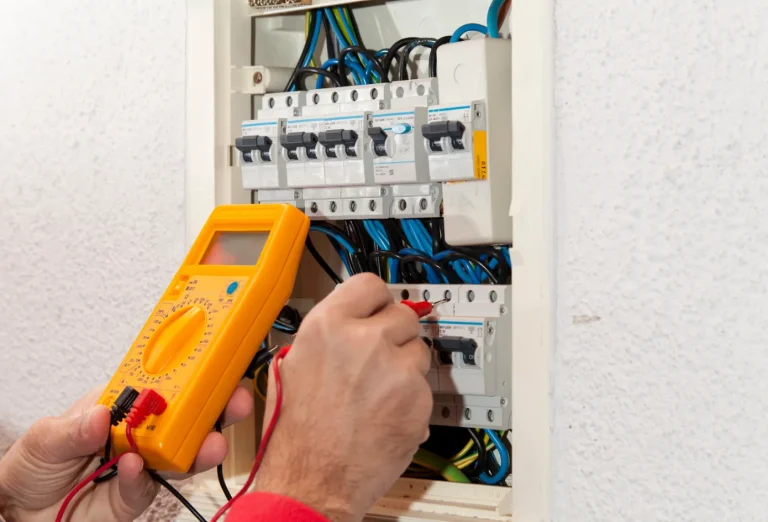 Every appliance category that has moved from gas to electric adds load to a panel that was never resized. Kitchens and laundry rooms are the usual pressure points, followed by anything added in a finished basement or garage.
Homeowners rarely notice this as a single event. It shows up as breakers that trip more than they once did, or as an electrician saying there is no room left for another circuit.
Because the load arrives in stages, the panel is rarely behind the first call. It becomes the reason once several additions land on a service already near full.
The Inspection That Comes With Selling
Wharton requires a Certificate of Habitation for every resale of residential property, inspected by the borough’s Zoning and Housing Officer, and the checklist covers electrical items such as ground-fault protection near the kitchen sink and covered openings in the main panel. Buyers’ home inspectors find the same problems independently.
That turns a deferred panel or an unpermitted addition into a transaction problem with a deadline attached. In our experience a meaningful share of residential service calls originate from a sale rather than from a failure.
Rental Property Turnover
Renter-occupied units make up 41.0 percent of Wharton’s occupied housing against 59.0 percent owner-occupied, according to the Morris County Office of Planning and Preservation’s Wharton Borough municipal profile. Rental units also need a borough inspection before a dwelling unit is occupied, which makes turnover between tenants a natural point to correct deferred electrical work.
Landlords and property managers therefore generate a steady, separate stream of service and safety calls that never touches the owner-occupied market at all.
What Does a Service or Panel Job Actually Involve?
A service upgrade is a permitted job with a utility component, which is what separates it from most other residential electrical work. It is not a same-afternoon repair.
The Permit and Inspection Layer
The licensed electrical contractor files the permit with the municipal construction office before work begins, then schedules the inspection once the equipment is in. That inspection is a genuine third-party check on the finished job, not a formality.
New Jersey adopted the 2023 National Electrical Code as its electrical subcode effective August 17, 2026, replacing the 2020 edition. New Jersey’s code rules generally allow a six-month grace period in which an application may still be filed under the previous edition, so your municipal construction office confirms which edition applies to your permit.
The Utility Coordination Layer
 Where the meter or service entrance is involved, the power has to be disconnected and reconnected by Jersey Central Power and Light rather than by the contractor. That step is scheduled with the utility, not arranged on the day.
This is usually the longest item in the timeline. The on-site electrical work is often a single day, while the surrounding coordination can run into weeks.
That gap between a one-day job and a multi-week schedule is what owners underestimate. Service work behaves less like a repair than a small project with a lead time.
Why the Sequence Matters
Timing carries more weight on service work than on most residential jobs, because two outside parties control parts of the schedule. A homeowner who starts early works around the utility’s calendar, while one who waits works around a closing date.
That is the practical argument for treating a marginal panel as a planned project. Left alone, it usually becomes urgent at the least convenient moment.
The work itself does not change when it is rushed. What changes is the range of dates available and how much of the schedule someone else controls.
Business owners face a different set of calls, which our guide to the work of a commercial service electrician in Wharton covers.
>Where the Other Residential Calls Come From
Service work leads by weight, while other categories lead by count. Those smaller calls matter because they are often the first symptom of a service-level problem.
- Outlet and switch failures. Often a worn device, but repeated failures on one circuit point back to the panel.
- Lighting work. Recessed lighting, fixtures, and exterior lighting, all part of our residential electrical services.
- Dedicated circuits for new appliances. Ranges, dryers, and vehicle chargers each need their own capacity, which often exposes a full panel.
- Standby generator work. A whole-house generator ties into the service, so it lands in the same category as panel work.
- Specialty and one-off jobs. High-ceiling fixture installations and low-voltage wiring fall under our special electrical services.
None of these is unusual alone. The pattern worth watching is one circuit or panel producing them repeatedly.
The Signal Worth Acting On
If your home has produced two or three seemingly unrelated electrical complaints in a year, the common cause is usually the service rather than the devices. That is the point at which an evaluation costs less than another round of piecemeal repairs.
At Paxos Electric Company, we have worked on Morris County service panels since 2004, and we would rather assess one before it forces a decision than after. Call us today to have your service evaluated by an electrician serving Wharton, or send the details through our online contact form.
Frequently Asked Questions
What is the most common electrical problem in a house?
Tripping breakers and dead outlets are the most frequently reported problems, but in older homes those symptoms often trace back to an electrical service or panel that has run out of capacity for how the household actually uses power today. The visible symptom and the real problem are usually in different places.
How do I know if my electrical panel needs to be upgraded?
Common indicators include breakers that trip more often than they used to, no available spaces left in the panel, lights that dim when a large appliance starts, or an electrician telling you a new circuit cannot be added. A panel that is undersized for the household is the underlying issue rather than any single symptom.
Does a panel upgrade need a permit in New Jersey?
Yes. Panel and service work requires a permit and an inspection under the New Jersey Uniform Construction Code, and the licensed electrical contractor normally files it and schedules the inspection. Your municipal construction office confirms the requirement for your specific project.
How long does an electrical service upgrade take?
Most residential service upgrades are completed in a day of on-site work, but the overall timeline is longer because it includes permitting and coordinating the power interruption with the utility. Where the meter or service entrance is involved, the utility’s scheduling is usually the longest part.
Will the power be off during a panel replacement?
Yes. Replacing a panel or service equipment requires the power to be disconnected for the duration of the work, and where the meter is involved the utility performs the disconnect and reconnect. The length of that outage is one reason panel work is scheduled rather than handled as a same-day call.
What electrical work do home inspectors flag most often?
Inspectors commonly flag undersized or obsolete panels, missing ground-fault and arc-fault protection, unpermitted additions and circuits, double-tapped breakers, and open junction boxes. Unpermitted work is among the items most likely to delay a closing, because correcting it means opening a permit after the fact.
Do landlords have different electrical obligations than homeowners?
In Wharton, rental properties require a borough inspection before a dwelling unit is occupied, so landlords face a check at every turnover rather than only at a sale. That is why turnover is a common point for correcting deferred electrical work, though the underlying code standard for the work itself is the same.
Is it worth upgrading a panel before selling a house?
It often is, because electrical defects found during a resale inspection arrive with a closing deadline attached and less room to shop the work. Handling a known panel problem in advance usually gives you more control over scheduling and scope than handling it under a contract timeline.
 How to Find a Trustworthy Electrician in Wharton
